Article Image
Hydration
Dehydrated vs. Dry Skin: Understanding the Difference
These terms are often used interchangeably, but they describe completely different skin conditions requiring different approaches.
Read ArticleSkin Education
Exfoliation
Exfoliation can help reveal smoother, brighter-looking skin — but more is not always better. Understanding when to exfoliate, when to stop, and how to support your skin barrier can make a significant difference in how your skin looks and feels.
Exfoliation · 5 min read
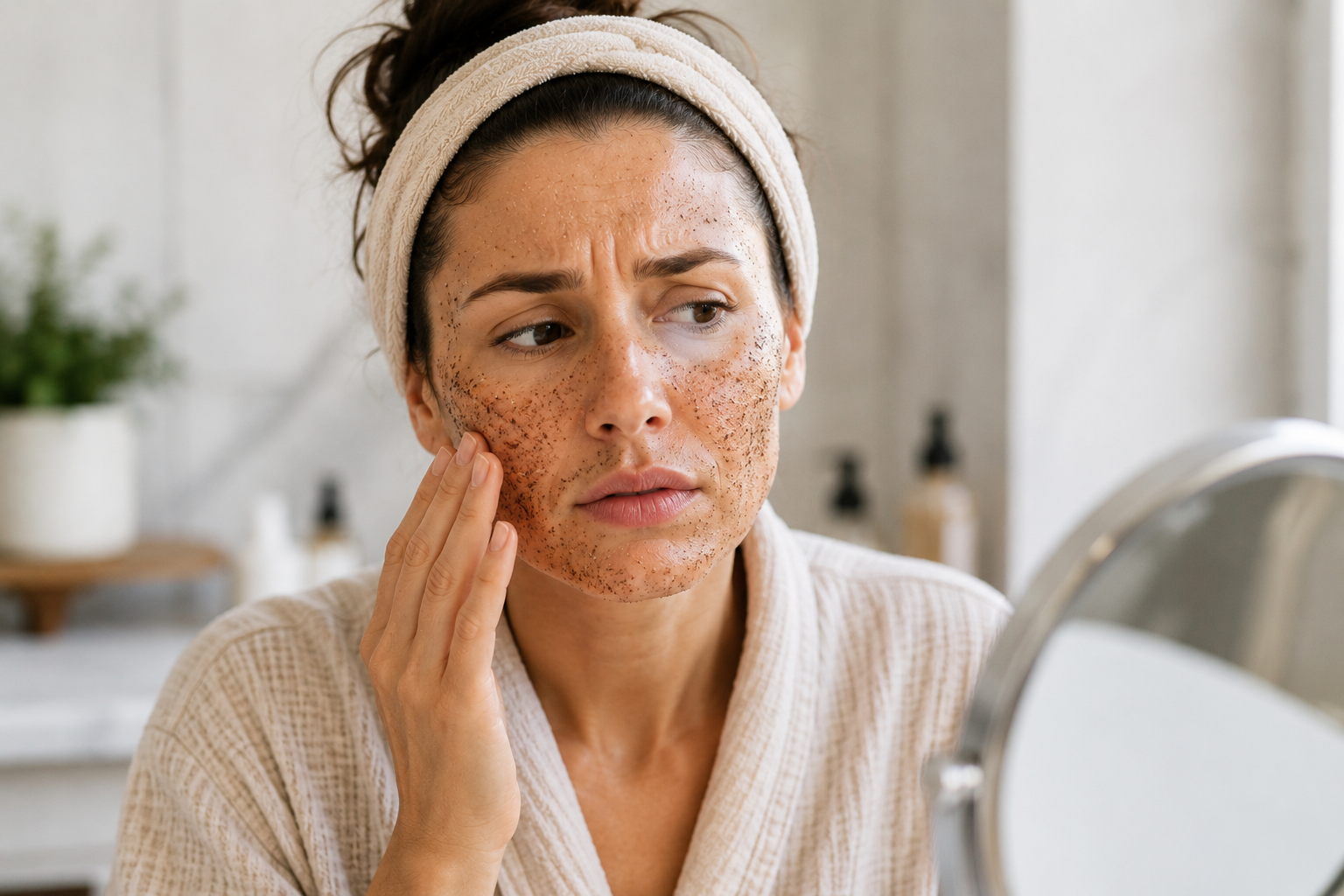
Exfoliation can help remove accumulated dead surface cells and improve the appearance of dullness, rough texture, and uneven skin. But between scrubs, acid toners, retinoids, peels, and at-home devices, it can be surprisingly easy to use too many exfoliating products at the same time.
When skin becomes over-exfoliated, its protective barrier may become compromised. Instead of looking smoother, skin may feel tight, sensitive, dry, irritated, or unusually reactive. Sometimes the appropriate response is doing less rather than adding another product.
Over-exfoliation occurs when exfoliating products or treatments are used more frequently or aggressively than the skin can comfortably tolerate.
Physical exfoliation includes scrubs or abrasive cleansing tools that manually remove surface cells. Chemical exfoliation uses ingredients such as alpha hydroxy acids (AHAs) and beta hydroxy acids (BHAs) to loosen and remove accumulated surface cells. Professional treatments, including chemical peels and certain resurfacing procedures, also exfoliate the skin.
None of these approaches is inherently “bad.” The problem is often the total amount of exfoliation the skin is receiving. Someone may use an exfoliating cleanser, an acid toner, a retinoid, and an exfoliating mask without realizing that several steps in the same routine may be increasing irritation potential.
Over-exfoliated skin does not always look obviously damaged. Early signs can be subtle. Common signs may include:
The outermost portion of the skin helps reduce water loss and protect the underlying skin from environmental stressors. Excessive exfoliation can disrupt this protective function, contributing to dryness, sensitivity, irritation, and reactivity.
This can create a cycle: the skin feels rough, so you exfoliate. The skin becomes irritated and dehydrated. The surface feels uneven again, so you exfoliate even more. Breaking that cycle may require doing less rather than adding another active product.
If your skin suddenly becomes sensitive, irritated, tight, or reactive, consider simplifying your routine temporarily. That may mean pausing exfoliating acids, scrubs, retinoids, and other potentially irritating active products while the skin settles.
Focus instead on a simple routine built around:
How quickly the skin feels comfortable again varies from person to person. If irritation is significant, persistent, painful, or accompanied by a rash or other concerning symptoms, evaluation by an appropriate healthcare professional may be warranted.
There isn’t one exfoliation schedule that works for everyone. Frequency depends on factors including skin type, sensitivity, the type and strength of exfoliant being used, other active ingredients in your routine, and professional treatments you may be receiving.
If you’re already using retinoids, acids, acne treatments, or other active ingredients, adding more exfoliation may not always be necessary. Instead of asking, “How often am I supposed to exfoliate?” a better question may be: “What amount of exfoliation does my skin actually need?”
Jordan's Take
When someone tells me their skincare isn’t working, one of the first things I look at is whether they’re actually doing too much. It’s easy to assume that stronger products or more exfoliation will produce faster results. Sometimes the skin is telling us the exact opposite. I prefer to look at the entire routine — what you’re cleansing with, which actives you’re using, how often, and how your skin is responding. The goal isn’t to use the most products. The goal is to understand what your skin needs.
If you’re unsure whether you’re exfoliating too much — or whether you should be exfoliating at all — a professional skin assessment can help take some of the guesswork out of your routine.
At Jordan Skin Studio in Frisco, Texas, recommendations are based on your current skin condition, concerns, routine, and goals rather than a one-size-fits-all protocol. That may include reviewing products you’re already using, identifying sources of irritation, and determining whether treatments such as a customized facial, hydrodermabrasion, or chemical peel are appropriate for your skin.
These terms are often used interchangeably, but they describe completely different skin conditions requiring different approaches.
Read ArticleThe correct order for applying your products — and why sequence matters more than you might think.
Read ArticleFrom over-washing to ingredient conflicts — the everyday errors Jordan sees most often in the treatment room.
Read ArticleStart with a conversation. Jordan can help evaluate your current routine, skin concerns, and goals and determine an approach that makes sense for your skin.
Get Started