Article Image
Exfoliation
Over-Exfoliation: When Less Is More
How too much exfoliation can compromise your skin barrier — and why doing less may be the answer.
Read ArticleSkin Education
Hydration
Dry and dehydrated skin can look surprisingly similar, but the reasons behind that tight, dull, or rough feeling may be different. Understanding what your skin is experiencing can help you choose products and treatments that better support what it actually needs.
Hydration · 6 min read
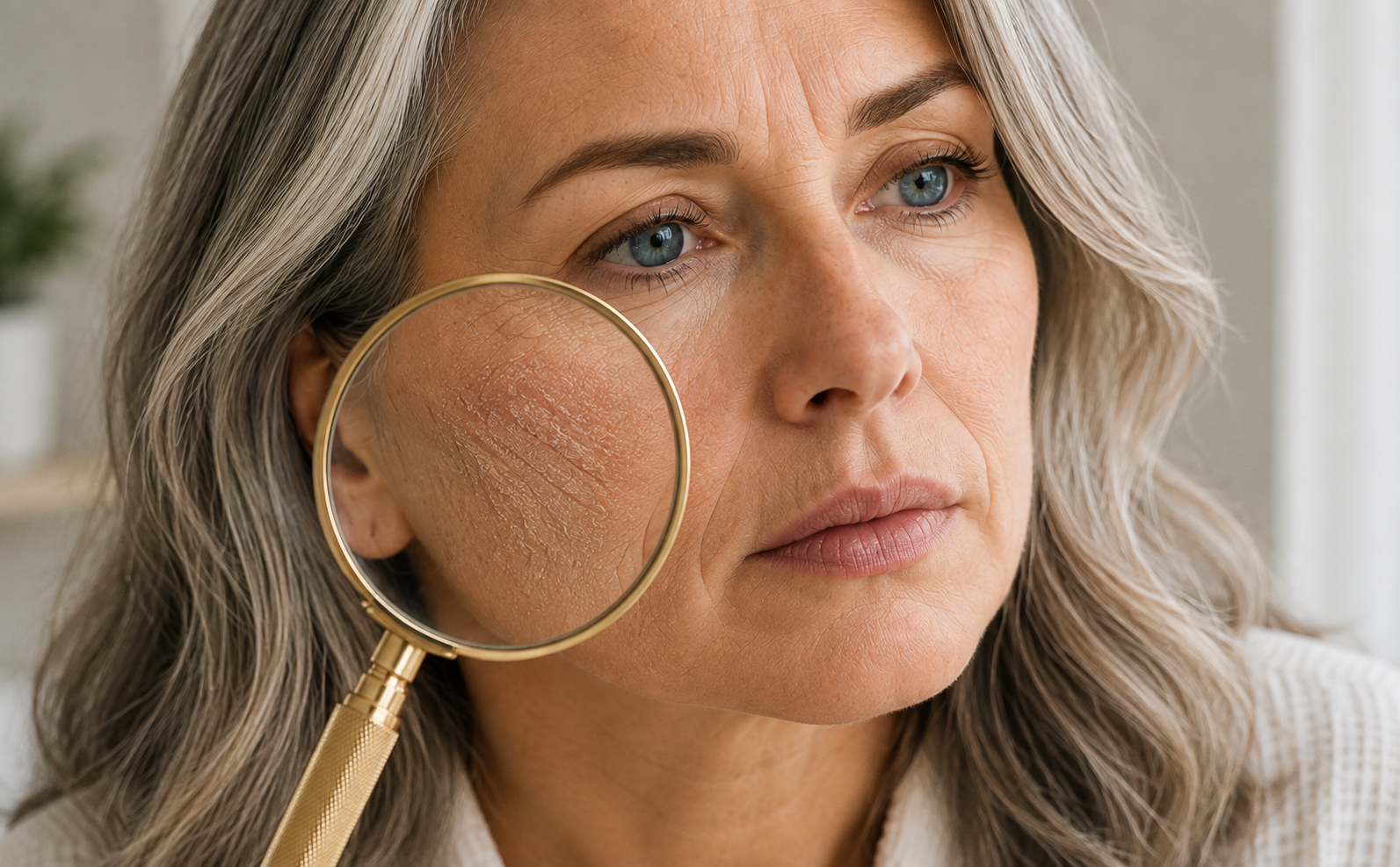
"Dry" and "dehydrated" are often used interchangeably in skincare, but they can describe different aspects of what is happening at the skin's surface.
In everyday skincare language, dry skin generally refers to skin that consistently struggles to maintain enough natural lipids and moisture, while dehydration describes a temporary state in which the skin is not retaining enough water.
The distinction is useful, but skin is more complicated than simply "oil versus water." Barrier function, environment, cleansing habits, age, skincare products, and individual skin characteristics can all influence how dry or dehydrated skin looks and feels.
And yes — it is possible to experience both at the same time.
Dry skin tends to be a more persistent pattern rather than something that appears only occasionally.
The skin's outer barrier helps retain moisture and contains lipids that support softness, flexibility, and protection. When that barrier is not functioning optimally, the skin can lose water more readily and may feel rough, tight, flaky, or uncomfortable.
Common signs may include:
Dryness can also become more noticeable with age, low humidity, harsh cleansers, hot water, and other environmental or skincare factors.
In professional skincare, "dehydrated skin" is commonly used to describe skin that appears to be lacking adequate water or is not retaining water effectively.
Unlike a naturally dry skin tendency, dehydration may be temporary and can occur in people whose skin is otherwise oily, combination, or normal.
Signs may include:
This is why someone can have an oily T-zone while still feeling tight or dehydrated elsewhere.
Yes.
Someone can naturally have dry skin while also experiencing temporary dehydration.
For example, dry skin may already have difficulty maintaining an effective moisture barrier. Low humidity, over-cleansing, aggressive exfoliation, travel, seasonal changes, or an overly complicated skincare routine may then contribute to additional water loss.
When both are present, the skin may benefit from an approach that supports both hydration and the barrier rather than simply adding one more active ingredient.
A number of everyday factors can influence how much water the skin retains.
These may include:
This is also where dehydration and over-exfoliation can overlap.
If someone repeatedly exfoliates skin that already feels tight or reactive, adding more exfoliation may intensify the problem rather than correct it.
The right approach depends on what the skin is actually experiencing.
For skin that is consistently dry, the routine may need greater emphasis on gentle cleansing, barrier-supportive ingredients, and moisturizers that help reduce moisture loss.
For skin that appears temporarily dehydrated, products containing water-attracting ingredients such as glycerin or hyaluronic acid may be useful when paired with an appropriate moisturizer that helps retain that hydration.
But ingredients are only one part of the picture.
If the routine contains several exfoliating acids, retinoids, strong cleansers, or other potentially irritating products, simply layering more hydrating serums may not address the underlying reason the skin feels tight.
Sometimes the routine itself needs to be simplified.
Jordan's Take
A lot of people come in saying, "My skin is dry," when what they're actually noticing may be dehydration, barrier stress, or a combination of several things. I don't like choosing a product based on one symptom alone. I want to know what you're cleansing with, what active ingredients you're using, how your skin changes throughout the day, and what has changed recently. The goal isn't to label your skin as quickly as possible. It's to understand why it's behaving the way it is and build a routine around that.
If you're continually buying products for "dry skin" but still feel tight, dull, flaky, oily and dehydrated at the same time, a professional skin assessment can help take some of the guesswork out of your routine.
At Jordan Skin Studio in Frisco, Texas, recommendations are based on the skin's current condition, existing products, treatment history, concerns, and individual goals. That may include identifying products that could be contributing to irritation, simplifying an overly complicated routine, or determining whether treatments such as a Customized Facial or Hydrodermabrasion Facial may complement the client's home skincare plan.
The objective is not simply to add more products. It is to determine what the skin actually needs.
How too much exfoliation can compromise your skin barrier — and why doing less may be the answer.
Read ArticleThe correct order for applying your products — and why sequence matters more than you might think.
Read ArticleFrom over-washing to ingredient conflicts — the everyday errors Jordan sees most often in the treatment room.
Read ArticleStart with a conversation. Jordan can help evaluate your current routine, skin concerns, and goals and determine an approach that makes sense for your skin.
Get Started